
California is home to a remarkable mix of cultures, communities, and
traditions that have developed over generations. Its identity has been
shaped by Indigenous peoples, Spanish and Mexican influences, immigrant
communities, and people who have arrived from different parts of the world.
These influences can be seen in the state’s architecture, historic
neighborhoods, cultural districts, local traditions, and everyday community
life.
From preserved Spanish colonial buildings to vibrant urban neighborhoods,
California offers many places where visitors can learn about the communities
that helped shape the state. These destinations provide more than
interesting sights. They offer opportunities to understand the history,
experiences, and cultural contributions that continue to influence
California today.
Understanding California’s Diverse Cultural Heritage
California’s cultural heritage reflects centuries of historical change and
interaction among different communities. Long before European colonization,
Indigenous nations maintained established societies, languages, traditions,
and relationships with the land throughout the region. Their histories and
cultural contributions remain an important part of California’s identity.
Spanish colonization, Mexican governance, and the eventual establishment of
California as part of the United States introduced additional cultural
influences. Later periods of immigration and economic development brought
communities from Asia, Europe, Latin America, and other regions, further
shaping the state’s cultural landscape.
These historical influences can be explored through museums, historic
districts, cultural centers, architecture, public spaces, and preserved
community landmarks. Each location offers a different perspective on
California’s development and the people who contributed to its history.
Old Town San Diego and California’s Early History
Old Town San Diego State Historic Park provides an
opportunity to explore an important part of California’s early history. The
area preserves buildings, streetscapes, and historical features associated
with the development of San Diego during the nineteenth century.
The historic district reflects the region’s Spanish, Mexican, and early
American periods. Visitors can explore preserved structures, museums,
traditional architectural details, and interpretive displays that explain
how the community developed through different stages of California history.
Old Town also provides insight into the everyday activities that shaped
early communities, including commerce, transportation, food, and social
gatherings. Its preserved environment helps visitors connect historical
events with the places where people lived and worked.
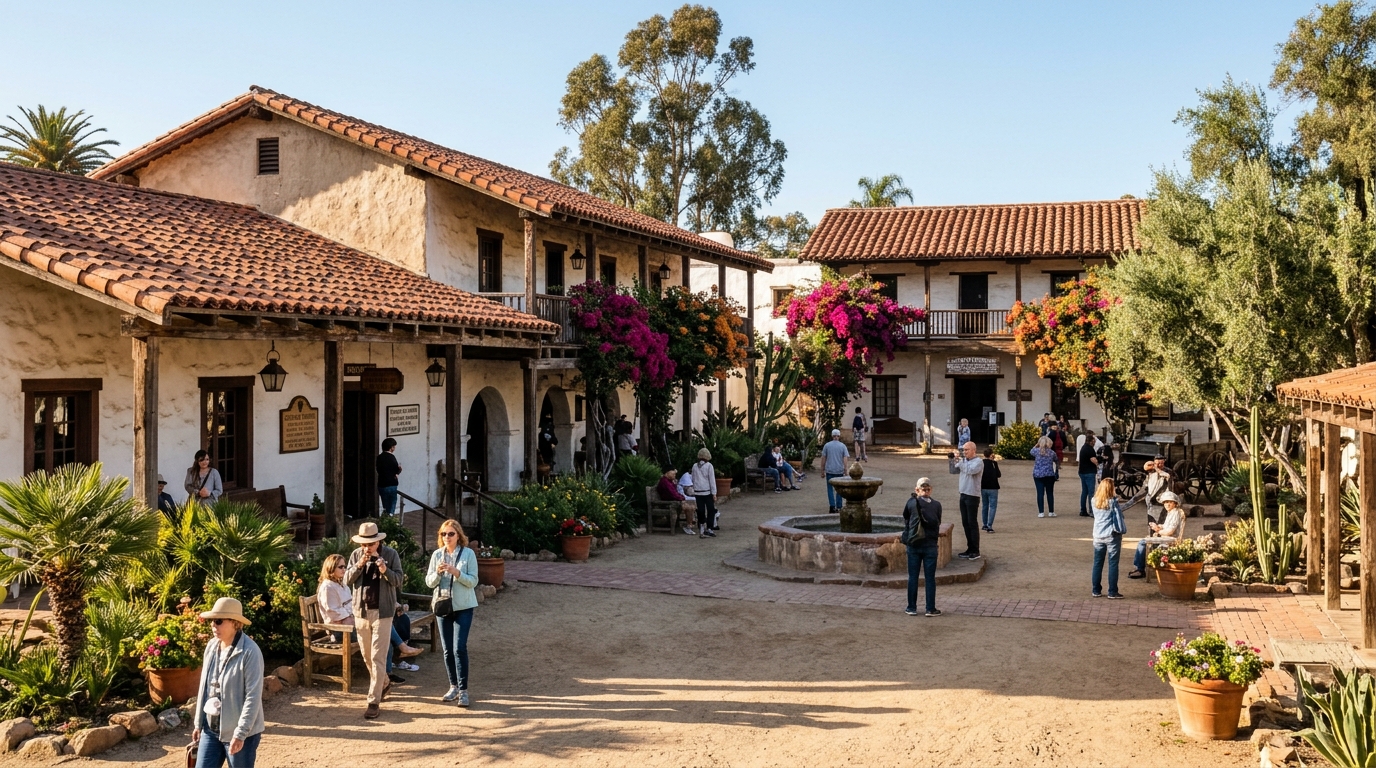
into the region’s early community life.
San Francisco Chinatown and the Legacy of Immigrant Communities
California’s cultural heritage is also reflected in the neighborhoods
established by immigrant communities. One of the most recognizable examples
is San Francisco Chinatown, a historic neighborhood with a
long connection to Chinese American history, culture, commerce, and
community life.
Chinese immigrants played an important role in California’s development,
particularly during the nineteenth century. Their contributions included
work in mining, agriculture, railroad construction, business, and other
industries. Despite discrimination, exclusionary policies, and difficult
social conditions, Chinese American communities established businesses,
cultural institutions, and neighborhood networks that helped preserve their
traditions.
Today, Chinatown remains an important cultural destination. Its streets
feature traditional architectural details, historic businesses, restaurants,
markets, temples, and community spaces. These elements reflect a cultural
identity that has continued to evolve while maintaining connections to
earlier generations.

cultural traditions, and community heritage.
Historic Architecture as a Reflection of Cultural Identity
Architecture provides another way to understand California’s cultural
heritage. Throughout the state, historic buildings reflect different
architectural traditions, construction methods, and artistic influences.
Spanish Colonial Revival structures, Victorian homes, early commercial
buildings, and traditional community landmarks all contribute to the
character of California’s historic districts.
These architectural styles can be found in cities, small towns, former
settlements, and established cultural neighborhoods. Some structures have
been preserved as museums or historic attractions, while others continue to
serve as residences, businesses, and community facilities.
Preserving historic architecture helps maintain a connection between
present-day communities and their earlier generations. It also allows
visitors to appreciate the craftsmanship, materials, and design approaches
that shaped different periods of California’s development.
Cultural Traditions and Community Celebrations
California’s cultural identity is not limited to historic buildings and
preserved neighborhoods. It is also reflected in festivals, artistic
traditions, food, music, religious celebrations, and community gatherings.
These activities provide opportunities for different generations to maintain
cultural connections and share their traditions with others.
Throughout the state, cultural events celebrate a wide variety of
backgrounds and community histories. Public festivals, traditional
performances, art exhibitions, and local celebrations help highlight the
contributions of communities that have influenced California’s social and
cultural landscape.
These traditions continue to change as communities grow and interact. Their
development demonstrates how cultural heritage can be preserved while also
adapting to new generations and contemporary experiences.
Why Preserving Cultural Heritage Matters
Cultural heritage provides a connection to the people, experiences, and
traditions that shaped a community. Historic neighborhoods, cultural
institutions, monuments, and traditional buildings help preserve memories
that might otherwise be lost through redevelopment, neglect, or changing
social conditions.
Preservation also supports education and community recognition. By
maintaining important cultural places, future generations can learn about
different historical experiences, understand the contributions of various
communities, and develop greater appreciation for California’s diversity.
Responsible preservation should also recognize the perspectives of the
communities connected to these places. Listening to local voices, respecting
cultural practices, and acknowledging difficult historical experiences are
important parts of understanding heritage accurately.
Exploring California’s Cultural Destinations Responsibly
Visiting cultural and historic destinations can provide valuable learning
experiences. Before traveling, visitors should check official destination
information, opening schedules, available tours, parking arrangements, and
any visitor guidelines.
Some historic neighborhoods have narrow sidewalks, uneven pathways, older
buildings, and busy pedestrian areas. Visitors should remain aware of their
surroundings, use designated crossings, respect private property, and follow
posted safety instructions.
Accessibility also varies between destinations. Museums and newer cultural
facilities may provide accessible entrances, restrooms, and visitor
services, while older historic structures may have architectural
limitations. Checking accessibility information before a visit can help
travelers plan accordingly.
Visitors should also approach cultural destinations with respect. Supporting
local businesses, observing community guidelines, and appreciating cultural
traditions without disrupting everyday neighborhood life can contribute to
more responsible exploration.
Discover the Cultural Heritage of California
California’s cultural heritage is reflected in its historic neighborhoods,
architectural landmarks, community traditions, and the experiences of
generations of residents. From the preserved streets of Old Town San Diego
to the vibrant history of San Francisco Chinatown, these destinations offer
opportunities to understand the many influences that have shaped the Golden
State.
Exploring these places encourages a deeper appreciation of California’s
history and cultural diversity. Through CaliLandmarks, readers can continue
discovering the communities, traditions, and historic destinations that make
California’s identity so distinctive.